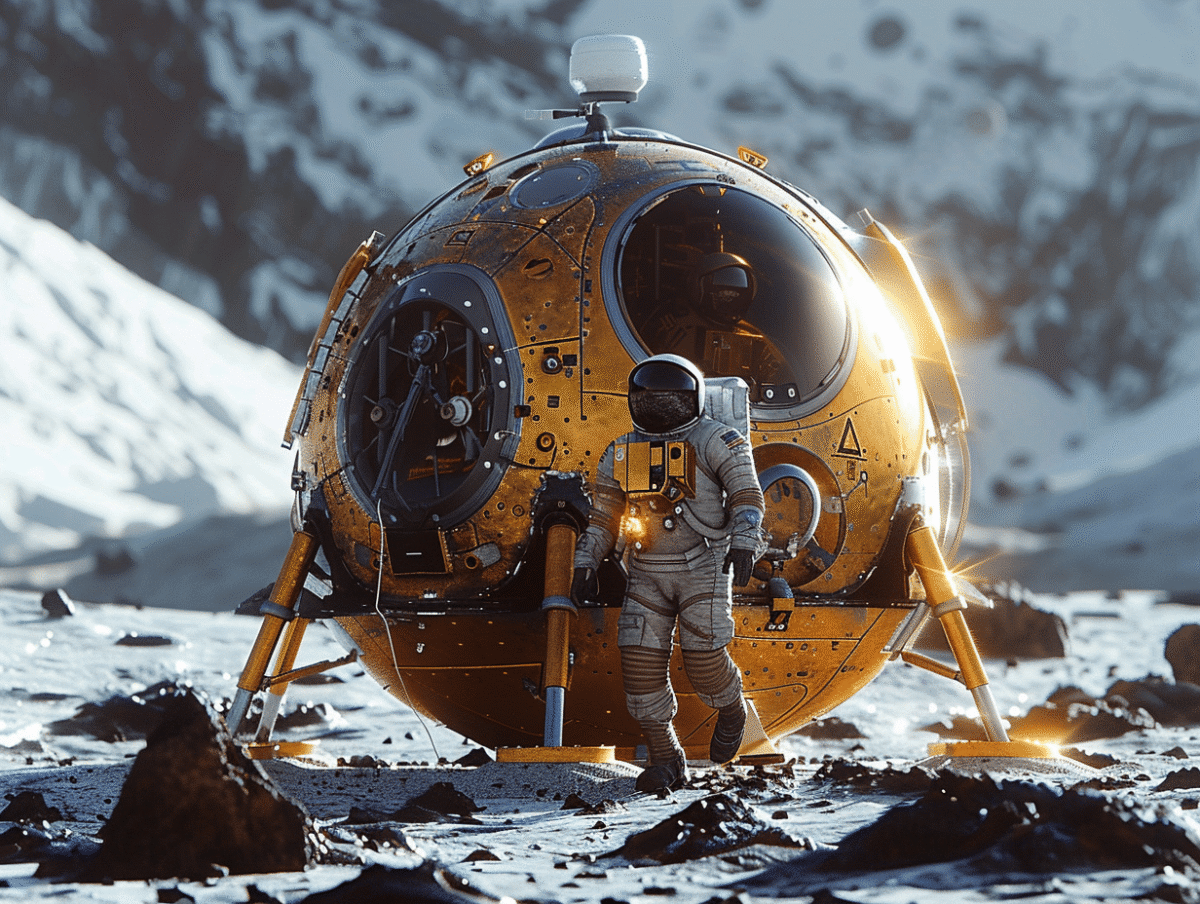
Interstellar travel, a millennial dream that is slowly becoming a tangible reality thanks to technological advancements, sparks an insatiable curiosity. Imagine leaving Earth’s atmosphere, navigating through space, and landing on the Moon, a journey that was once reserved for professional astronauts. Today, the practical details of this extraordinary adventure are within reach of aspiring cosmic travelers. From the physical preparation required of passengers to the technology involved in the journey, including logistical arrangements before departure and the prospects of living in a lunar environment, every aspect of this trip is meticulously prepared.
Preparations and Considerations for a Lunar Trip
Before tackling the question of how long it takes to get to the Moon, it is essential to outline the necessary preparations for such a journey. Preparation begins long before the engines are fired, extending to months of intense physical and psychological training. Travelers must acclimate to the absence of gravity, an environment that demands both physical and mental resilience. The training is relentless, simulating the conditions of space travel and lunar life to prevent unforeseen events from turning into disasters.
In terms of propulsion, chemical propulsion, while perfectly mastered, remains the most viable means of escaping Earth’s gravity to this day. Researchers continue their quest for faster and more efficient alternatives, but current technology still dictates the limits of our ability to conquer our planetary system. A journey to the Moon, with current means, typically lasts about three days.
Launch and reception infrastructures are also major components of the lunar journey. Launch bases must be equipped to withstand the rigors of takeoff, and landing on the Moon requires facilities capable of ensuring the survival of travelers in a hostile environment. Coordination between different sites is vital, with each stage of the journey requiring flawless precision and reliability.
The issue of the sustainability of a human presence on the Moon cannot be overlooked. Protection against radiation, management of vital resources, and the construction of viable long-term habitats are challenges that must be addressed seriously. The Moon is not just a destination; it is a new world where human ingenuity must adapt and thrive. The fascination with interstellar travel, once confined to the realm of science fiction, now confronts the tangible reality of a harsh universe and a science that must continually push its limits.
The Technological and Human Challenges of the Interstellar Journey
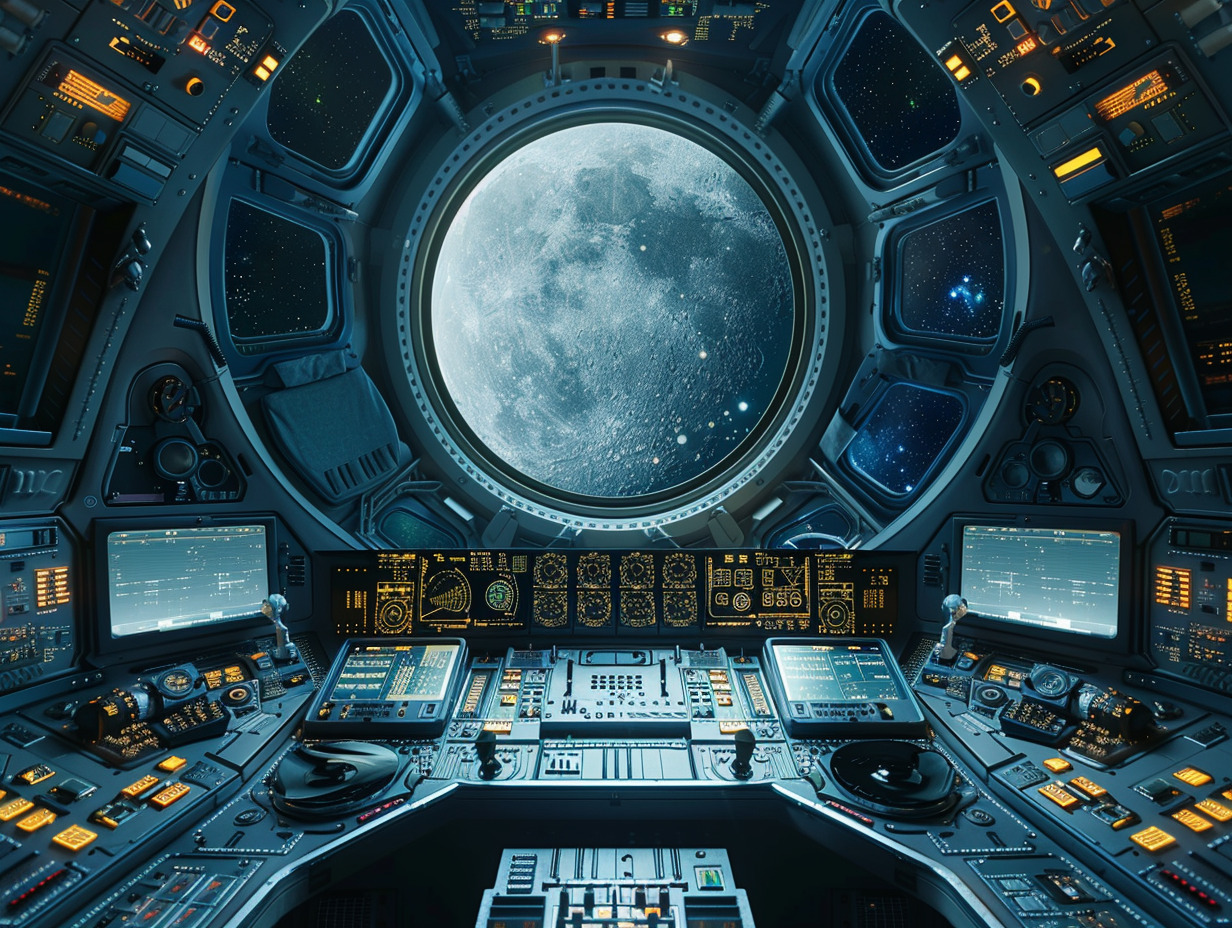
In the face of the vastness of the interstellar medium, the technological challenges are colossal. The NASA, among other space agencies, has meticulously studied the extreme conditions prevailing between the stars. The distance separating Earth from Proxima Centauri, our closest stellar neighbor at 4.22 light-years, raises a significant problem: with current technologies, a spacecraft would take approximately 100,000 years to reach this star. Scientists are therefore compelled to design radically new propulsion systems capable of approaching the speed of light to drastically reduce travel times.
The technological challenge is accompanied by a human imperative. Long flight durations raise questions about crew survival in an inert environment, not to mention the psychological effects of prolonged isolation. No space agency in the 21st century, including NASA, has a concrete plan for interstellar exploration, leaving these questions in the realm of fundamental research and speculation.
The design of a space probe capable of traversing the gaps between stars requires unprecedented durability, able to withstand intense radiation, micrometeoroids, and the vacuum of space. Furthermore, communication systems must be capable of transmitting data over incomprehensible distances, challenging the current limits of technology.
International collaboration is essential to tackle these challenges. Shared expertise, combined resources, and unified action are prerequisites for advancing space exploration. The road to the stars is fraught with obstacles, but it also reflects humanity’s capacity to transcend its limits and push the boundaries of the imaginable, once relegated to the realm of science fiction.