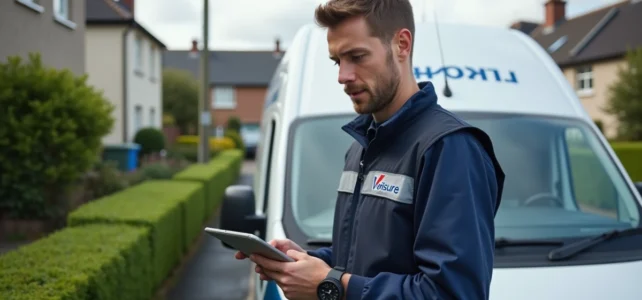
A detector goes off in the middle of the night, the monitoring center receives the alert, and the question arises: will an agent physically respond or will the incident be handled remotely? The movements of Verisure agents follow a precise logic, where each step filters out false alarms before engaging in an on-site intervention. Understanding this mechanism allows one to adjust expectations and optimize the response of their alarm system.
Remote handling without deployment: cases where no one comes
It is often assumed that an alarm sounding automatically triggers the dispatch of a security agent. In practice, the majority of alerts are resolved without physical intervention. The monitoring center first analyzes the images captured by photo or video detectors, cross-references data from sensors (motion, door opening, glass breakage), and attempts to contact the subscriber.
If the operator identifies a pet, a draft, or a keyboard mishap, the alert is classified as unfounded. No deployment is triggered. This filtering relies on the installed equipment’s ability to transmit usable visual elements.
A residence equipped only with motion detectors without image capture poses a real problem: the operator lacks elements to confirm or deny the intrusion. In this case, remote handling reaches its technical limits, and the protocol shifts to a telephone contact attempt, followed potentially by a deployment. Feedback on this point varies depending on the configuration of each installation and the quality of the network coverage of the residence.
To better understand the decision-making chain related to Verisure agents’ movements, three levels of response can be distinguished: remote doubt resolution, dispatch of a security agent, and calling law enforcement.
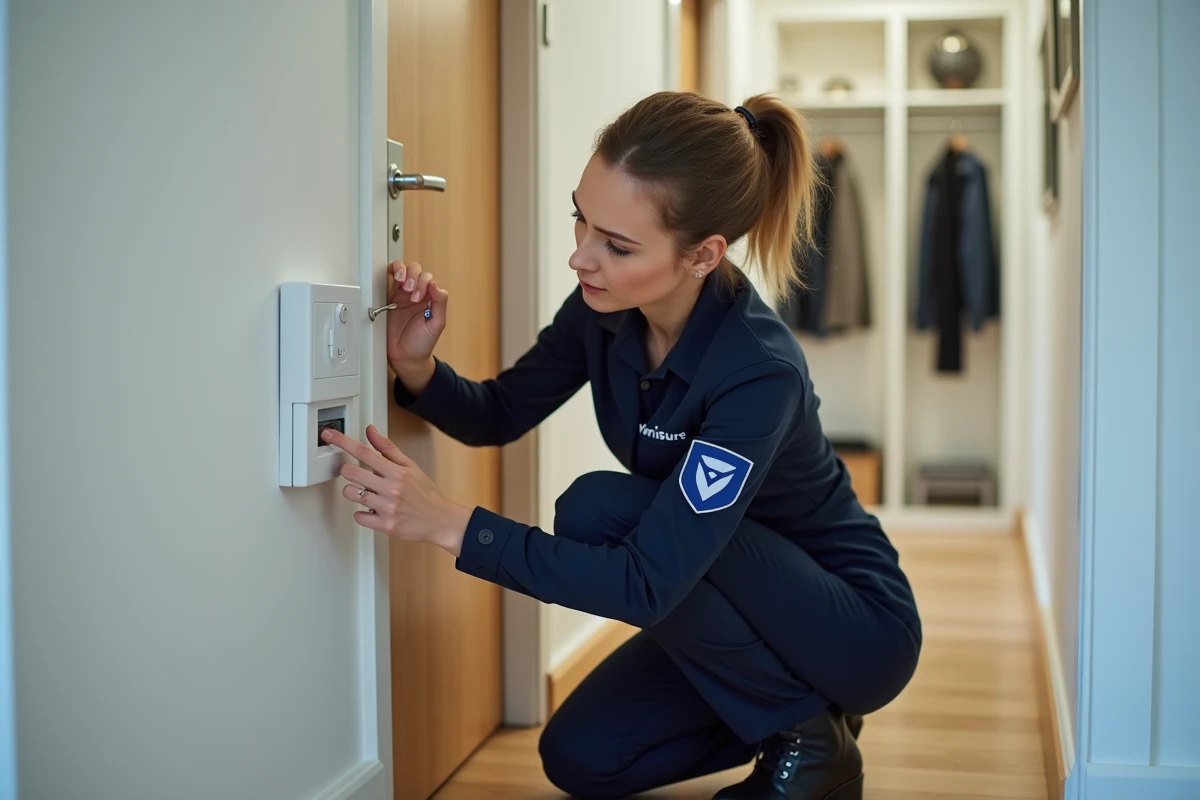
Doubt resolution and dispatch of a Verisure security agent
Doubt resolution is the step that conditions any physical deployment. It is regulated: law enforcement does not intervene without prior confirmation of a suspicious event. The CNAPS (National Council for Private Security Activities) imposes this obligation on monitoring companies.
Specifically, when the monitoring center operator detects abnormal movement on the images or cannot reach the subscriber, they dispatch a security agent for an on-site verification. This agent goes to the residence, conducts an exterior tour, checks the access points, and sends a report back to the center.
What the security agent can and cannot do
The agent does not enter the home. Their role is limited to an exterior inspection and visual confirmation of signs of forced entry (forced door, broken window, torn shutter). If they confirm an intrusion, the monitoring center then contacts law enforcement with the collected information.
This legal framework explains why an agent’s deployment does not guarantee an arrest. The agent has no police powers. They secure the situation and document the facts to expedite the police or gendarmerie’s response.
- The agent checks the access points of the residence (doors, windows, garage) and reports any visible anomalies from the outside.
- They can activate or deactivate the alarm remotely in coordination with the monitoring center if the subscriber requests it.
- In case of confirmed intrusion, they remain on-site until law enforcement arrives to hand over a report.
Response times and operational constraints on the ground
The reaction time between the alert and the arrival of an agent depends on several factors. The distance between the protected residence and the nearest available agent plays a direct role. In densely populated urban areas, the delay is generally shorter than in rural or suburban areas.
Verisure relies on a network of partner security agents spread across the territory, but coverage is not uniform. A subscriber located in an isolated municipality may wait longer than a subscriber in the city center. This point should be clarified during subscription.
Night, weekends, and holidays
The monitoring center operates continuously. The dispatch of an agent remains possible at night and on weekends, but the availability of partner agents may fluctuate. It is observed that nighttime slots tend to have more actual triggers, which can lengthen response times if multiple alerts occur simultaneously in the same area.

Verisure alarm and Guardian app: protection beyond the home
The scope of Verisure’s deployments is no longer limited to the home. The Guardian app extends the logic of assistance to personal movements. It allows for triggering a geolocated alert from a smartphone, for example during a walk or in a threatening situation outside.
Guardian relies on complete remote handling: the monitoring center operator receives the user’s GPS position, establishes audio contact, and can alert emergency services. No security agent is physically dispatched in this case. Mobile protection thus remains a connection assistance, not a field intervention.
This distinction is useful for subscribers who might think they benefit from an agent’s deployment everywhere and at all times. The fixed alarm system and the mobile app cover different situations with different levels of response.
Optimizing the triggering of an agent’s deployment
Some practical adjustments directly influence the monitoring center’s ability to send an agent quickly:
- Position detectors with image capture in main passage areas (entrance, hallway, living room) to provide usable visuals to the operator.
- Update contact numbers in the client area: if the operator cannot reach the subscriber, the deployment protocol is triggered more quickly.
- Regularly test the alarm system to ensure that each detector communicates properly with the control panel and that images are correctly transmitted to the monitoring center.
- Report any changes in address or configuration of the residence (renovations, new door, addition of a pet) to avoid recurring false alarms that slow down the processing of real ones.
A well-configured system reduces the noise of false alerts and allows operators to prioritize real situations. The deployment of an agent remains the final link in a chain that begins with the quality of the installed equipment and the rigor of the information transmitted by the subscriber.