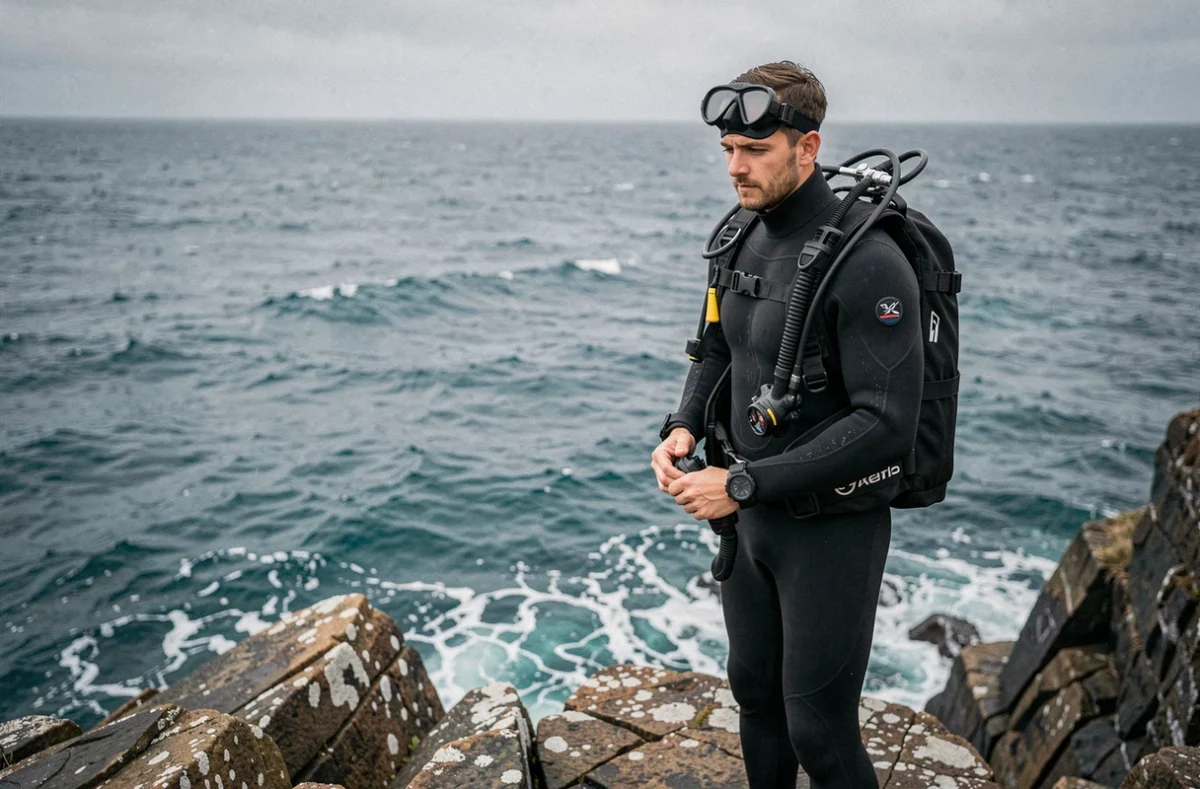
Diving is not just about putting on a wetsuit and jumping off a boat. Each type of diving involves physiological constraints, specific equipment, and distinct safety protocols. Here, we detail the technical specifics that truly guide the choice of practice, from snorkeling to deep diving.
Gas Management and Decompression Tables: What Separates Practices
The determining variable between types of diving remains the breathing mix and the management of the partial pressure of gases. In classic air tank diving (21% oxygen, 79% nitrogen), nitrogen narcosis becomes a limiting factor beyond a certain depth. Switching to Nitrox (oxygen-enriched mix) reduces nitrogen load, extends no-decompression stops but imposes strict monitoring of the maximum operating depth to avoid oxygen toxicity.
Trimix diving, which adds helium to the mix, pushes the limit of narcosis for deep dives. Each gas change requires a dive computer set to the correct mode, capable of recalculating stops in real-time. It is this logic of gas management that structures training courses, from Level 1 FFESSM to technical instructor certification.
For those wishing to delve deeper into the specifics of each discipline, it is possible to consult Sortie 24 for diving to compare practices according to one’s profile.
Snorkeling and Freediving: Two Disciplines, Two Safety Logics
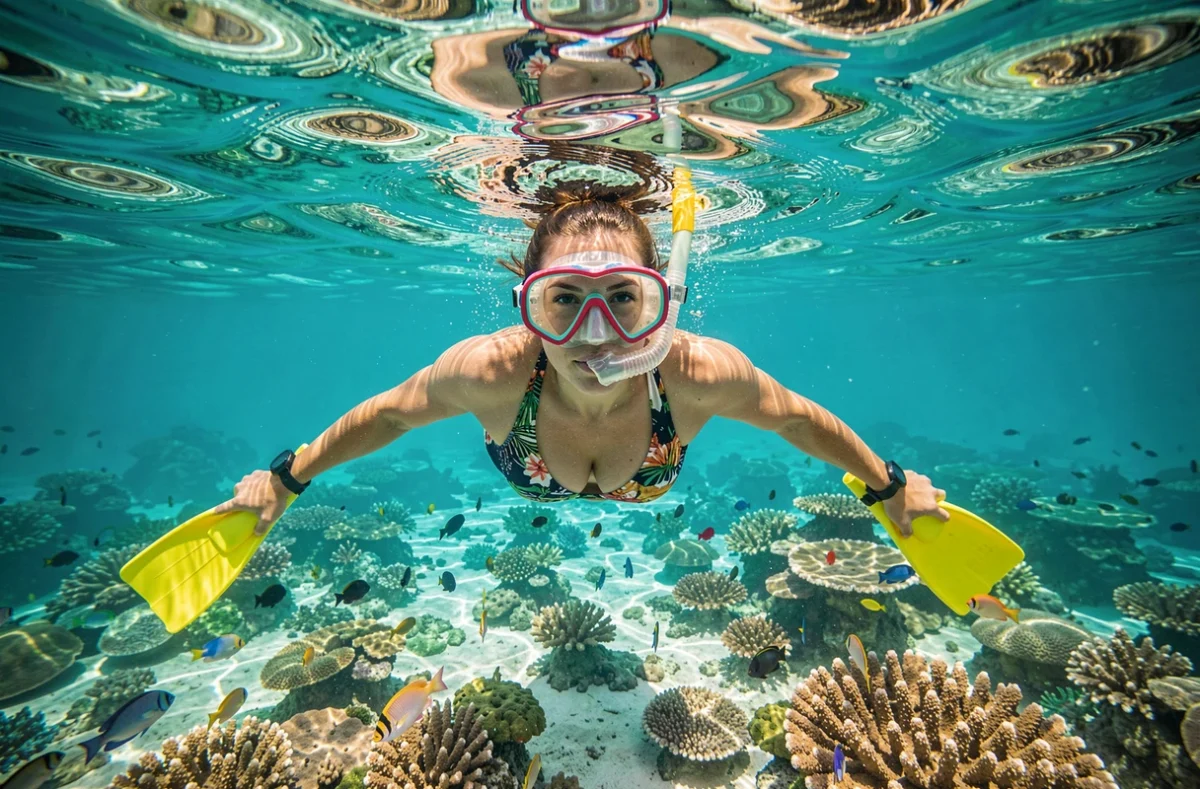
Snorkeling is practiced at the surface with a mask, snorkel, and fins. No tank, no regulator, no stops. The apparent simplicity of the equipment masks a real constraint: thermoregulation. Without an appropriate wetsuit, hypothermia occurs much faster than one might imagine, even in temperate waters.
Freediving operates under a radically different logic. The management of the immersion reflex and hypoxia conditions all progression. Freedivers work on CO₂ tolerance, ventilation techniques, and muscle relaxation. Hypoxic blackout remains the main risk, making buddy practice non-negotiable.
In France, the FFESSM regulates both activities with distinct certifications. An experienced freediver is not automatically qualified in tank diving, and vice versa. Safety reflexes, stress management, and ascent protocols have nothing in common.
Diving in Natural Environments: Sea, Lake, and Quarry
Diving in a lake or quarry is not a simplified version of diving in the sea. The regulatory framework of the Sports Code applies equally. Checking equipment before each dive, ensuring the composition of the dive team is suitable for the least experienced diver, and informing a close person of the dive location and time are obligations that do not vary by environment.
However, conditions differ on several technical points:
- The thermocline in freshwater is often more pronounced and abrupt than in the sea, with temperature differences that affect buoyancy and air consumption.
- Visibility can drop to just a few dozen centimeters at the bottom of a quarry, necessitating lighting and navigation by compass or line.
- The absence of current does not mean the absence of risk: sediments stirred up by fins can create a rapid “whiteout” in confined spaces.
We recommend that divers accustomed to the sea complete at least one guided dive in freshwater before venturing out independently. Buoyancy references change, and weighting must be recalculated (freshwater being less dense than saltwater).
Diving Equipment: Selection Criteria by Practice
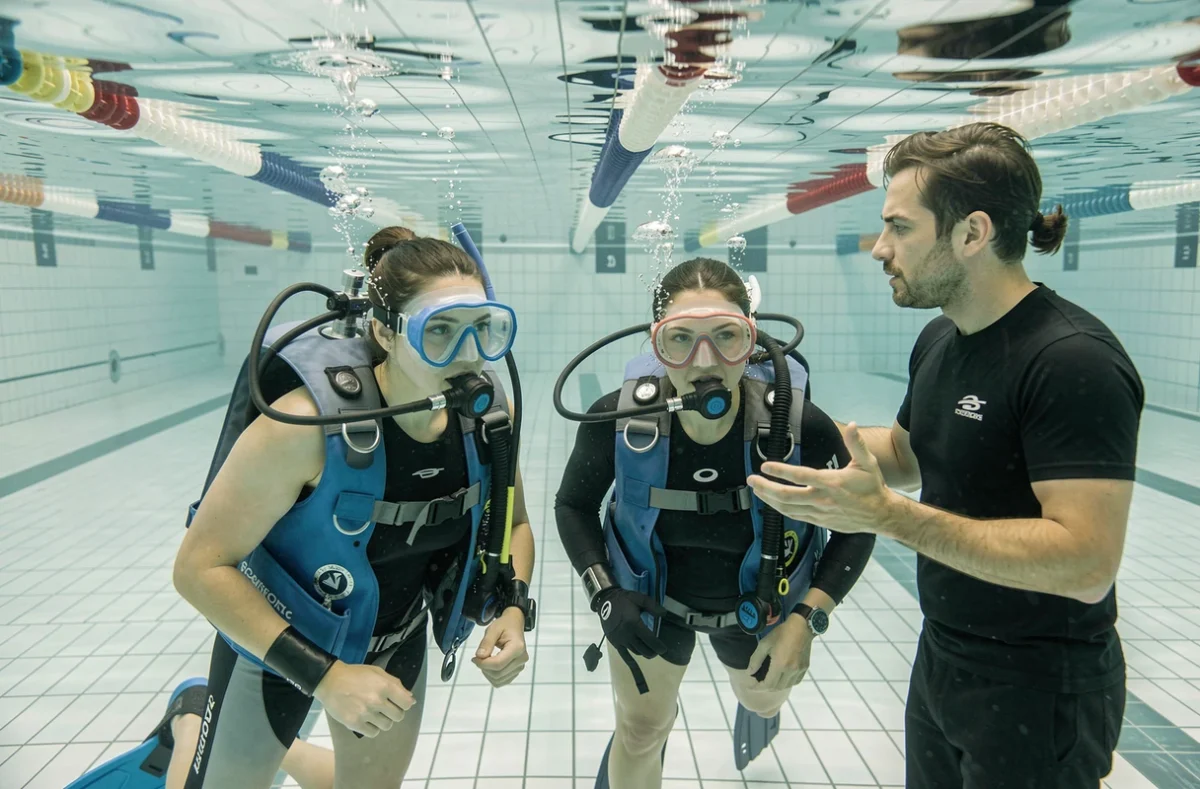
Equipment is not universal. A large-volume mask is suitable for recreational diving but hinders the freediver, who needs a small-volume mask to limit equalization effort. Open-heel fins with booties offer versatility and thermal protection in rocky or cold environments, whereas adjustable fins are better suited for tropical dives.
The wetsuit is chosen based on water temperature and dive duration, not the “type” of diving. A five-millimeter wetsuit is sufficient in the Mediterranean during summer. In Brittany or in quarries, a semi-dry or even a dry suit quickly becomes necessary.
For the dive computer, the choice of mode (air, Nitrox, freediving, trimix) must exactly match the practice. A computer set to air mode while the diver is breathing Nitrox will calculate erroneous stops. Checking the mode before each entry into the water is part of the buddy check.
Handisub and Accessibility: A Structured Framework in France
The Handisub program, developed jointly by the FFESSM, the French Handisport Federation, and the French Adapted Sports Federation, regulates diving for people with disabilities. It distinguishes EH1 and EH2 instructors based on their qualification level and provides a PESH progression up to forty meters, always with supervision.
Technical adaptation focuses on thermoregulation, underwater communication, ear equalization, and evacuation procedures from the boat. This is not a “separate” practice: it is an additional protocol integrated into the federal curriculum, allowing divers with motor or sensory constraints to progress in a secure environment.
Training and Recertification: RIFA-Diving as a Reference
The RIFA-Diving (Reactions and Intervention in the Event of a Diving Accident) is involved in obtaining certain levels but especially in maintaining rescue skills. The FFESSM Technical Training Manual recommends recertification at least every three years.
- The actions for securing an injured person at the surface degrade quickly without regular practice.
- The protocols for alerting rescue services and administering oxygen evolve, making recertification even more relevant.
- For autonomous divers, this refresher constitutes an investment of a few hours that can make a difference during a real incident.
The choice of a type of diving involves much more than a preference for underwater scenery. It determines the equipment, training, safety protocols, and applicable regulatory framework. It is better to invest time in understanding these differences before the first entry into the water than to improvise once under pressure.