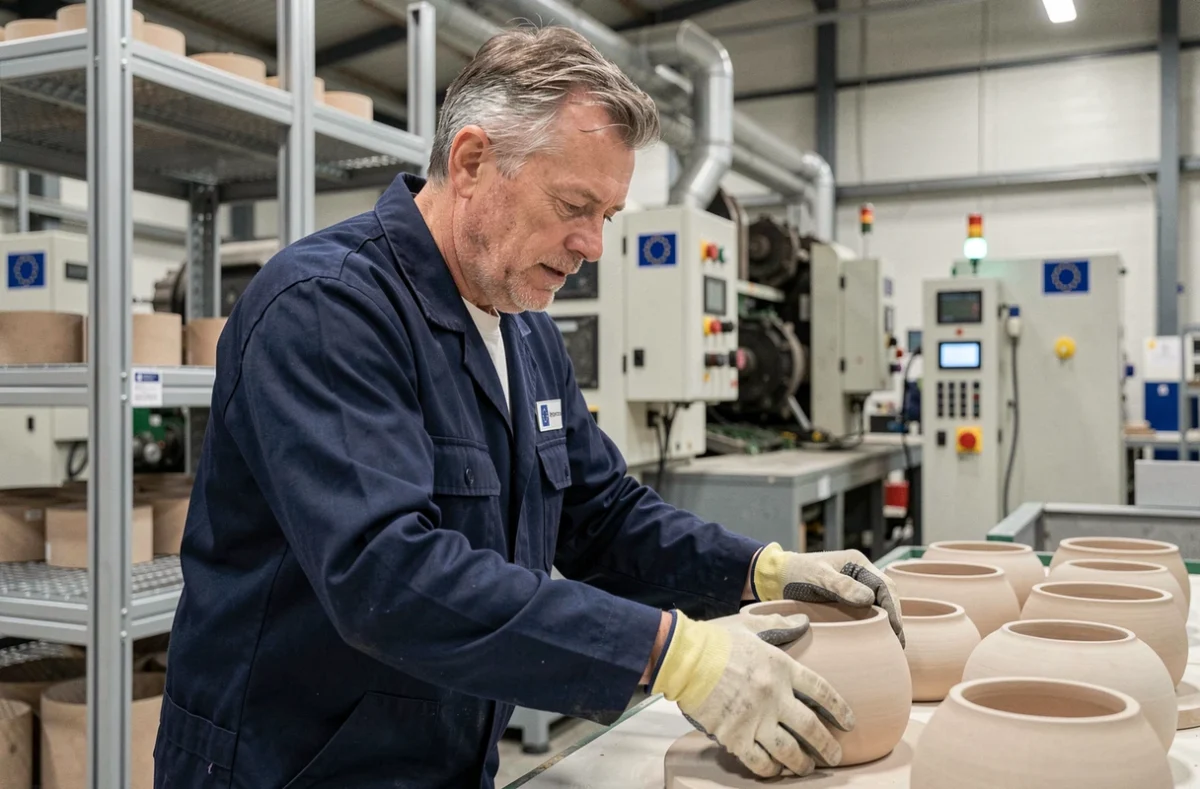
The inscription “made in EEC” still appears on some products found at flea markets, online, or at the back of a cupboard. EEC stands for European Economic Community, the English translation of Communauté économique européenne (CEE). This entity has not existed under this name for several decades, which raises a concrete question: what does this label really mean on a product today, and what did it guarantee at the time?
Made in EEC vs. current markings: what the law provides
The most widespread confusion is treating “made in EEC” as a quality label comparable to current certifications. In reality, this label was never an official quality mark. It simply indicated a geographical area of manufacture, according to the customs rules in effect at the time of the EEC.
Even today, the European Union does not have a single harmonized rule precisely defining when a manufacturer can affix “Made in EU” or “Made in” followed by a member country. Customs authorities rely on the principle of last substantial transformation, codified in Article 60 of the Union Customs Code.
This principle means that a product assembled in an EU country from imported components can legally bear the “Made in” label of that country, provided that the transformation carried out is deemed economically significant. To better understand the meaning of made in EEC, one must therefore reason in customs terms, not in terms of quality certification.
| Criterion | Made in EEC (historical) | Made in EU (current) |
|---|---|---|
| Legal basis | CEE origin rules | Article 60, Union Customs Code |
| Mandatory nature | Not mandatory (non-food products) | Not mandatory (non-food products) |
| Intrinsic quality guarantee | None | None |
| Determining principle | Last substantial transformation | Last substantial transformation |
| Truthfulness control | National customs | National customs + EU consumer law |
The table highlights a striking continuity. The mechanism has not fundamentally changed: the origin marking remains optional and voluntary for most non-food goods. The main difference lies in the consumer protection framework, which is more robust in current EU law.
Common myths about the made in EEC label
Several misconceptions circulate around this label. The most persistent deserve factual examination.
A made in EEC product would be entirely manufactured in Europe
The principle of last substantial transformation allows for a significant portion of the components to come from outside the area. An item whose raw materials come from Asia but whose final assembly took place in a EEC country could legitimately bear the label. This operation is not fraudulent: it corresponds exactly to the customs definition of origin.
This label would prove superior quality
The origin marking was never designed as an indicator of quality. It responds to a customs and commercial logic. Safety and compliance standards (CE marking, European directives on chemical substances) are distinct mechanisms, independent of the displayed country of origin.
A product marked made in EEC would necessarily be old and therefore “authentic”
The EEC existed from the late 1950s until the early 1990s under this name. A product bearing this label is therefore at least several decades old. However, age does not guarantee either rarity or market value of an item. In second-hand markets, this label is sometimes used as a sales argument without objective basis regarding the quality of the product.
Non-preferential origin rules: the mechanism consumers are unaware of
The heart of the matter lies in the distinction between preferential and non-preferential origin rules. The former apply within the framework of bilateral trade agreements: they allow for reductions in customs duties. The latter, known as non-preferential, determine the economic nationality of a product for labeling, trade statistics, and the application of trade policy measures.
- The substantial transformation must be “economically justified” and carried out in a company equipped for this purpose, according to the Union Customs Code.
- A simple repackaging, change of packaging, or labeling is not sufficient to confer the origin of a country.
- When a company voluntarily chooses to display an origin, the claim must remain accurate and not mislead the consumer under European consumer law.
This last point is crucial. Even in the absence of labeling obligations, any misleading origin mention exposes the manufacturer or importer to legal action. The marking of origin is done under the sole responsibility of the manufacturer or importer.
What “made in EEC” reveals about globalized production chains
The expression “made in EEC” belongs to a time when supply chains were already international, but less fragmented than today. A product could pass through two or three countries before reaching the consumer. Today, a single item can involve dozens of suppliers spread across several continents.
This evolution makes the very concept of “made in a country” increasingly blurred. The European Parliament has even produced an analysis on “Made in the EU” claims and fragmented global supply chains, highlighting that the origin labeling as it exists reflects only part of the production reality.
For a consumer wishing to assess the actual provenance of a good, the origin marking alone is not enough. Sector certifications, value chain audits, and environmental labels provide complementary information that the simple geographical mention does not cover.
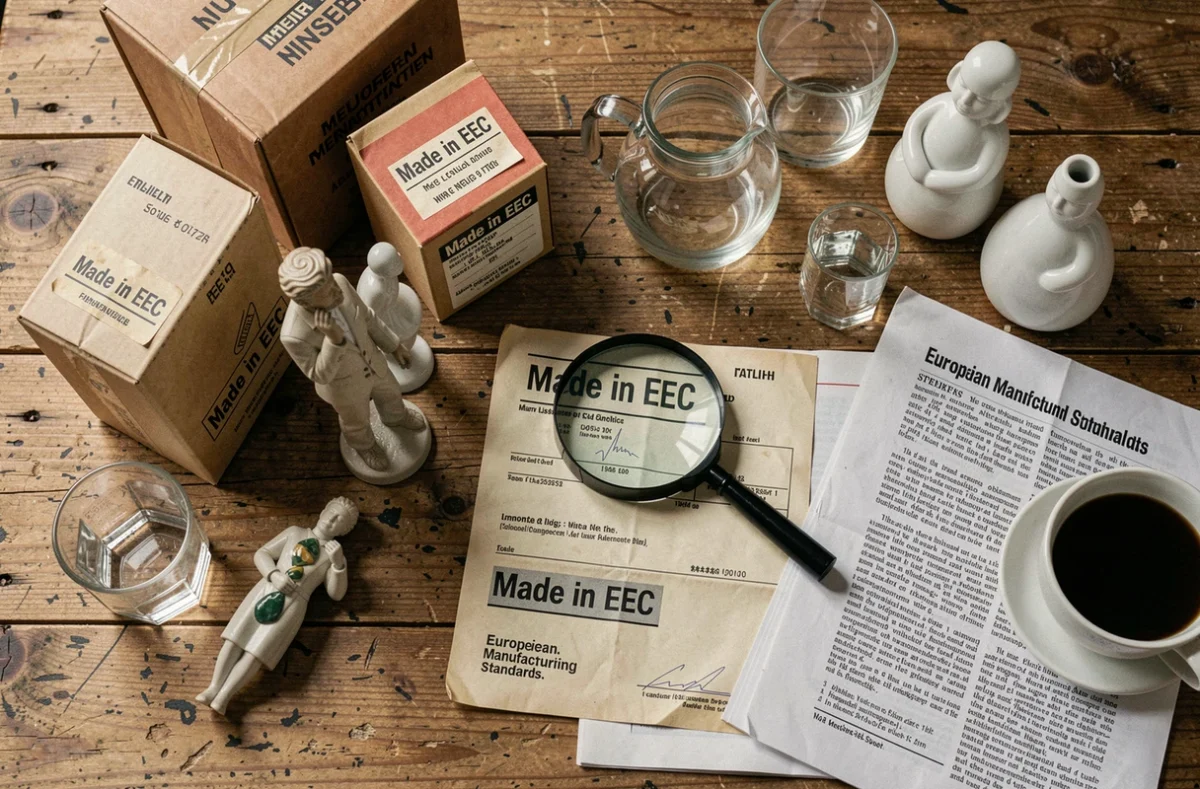
The inscription “made in EEC” remains a useful historical marker for dating an object, but it says nothing reliable about its quality, composition, or manufacturing conditions. The European legal framework has evolved regarding consumer protection, not on the fundamental principle of origin marking. Anyone encountering this label on a product now has the keys to read it without attributing more significance to it than it has ever had.