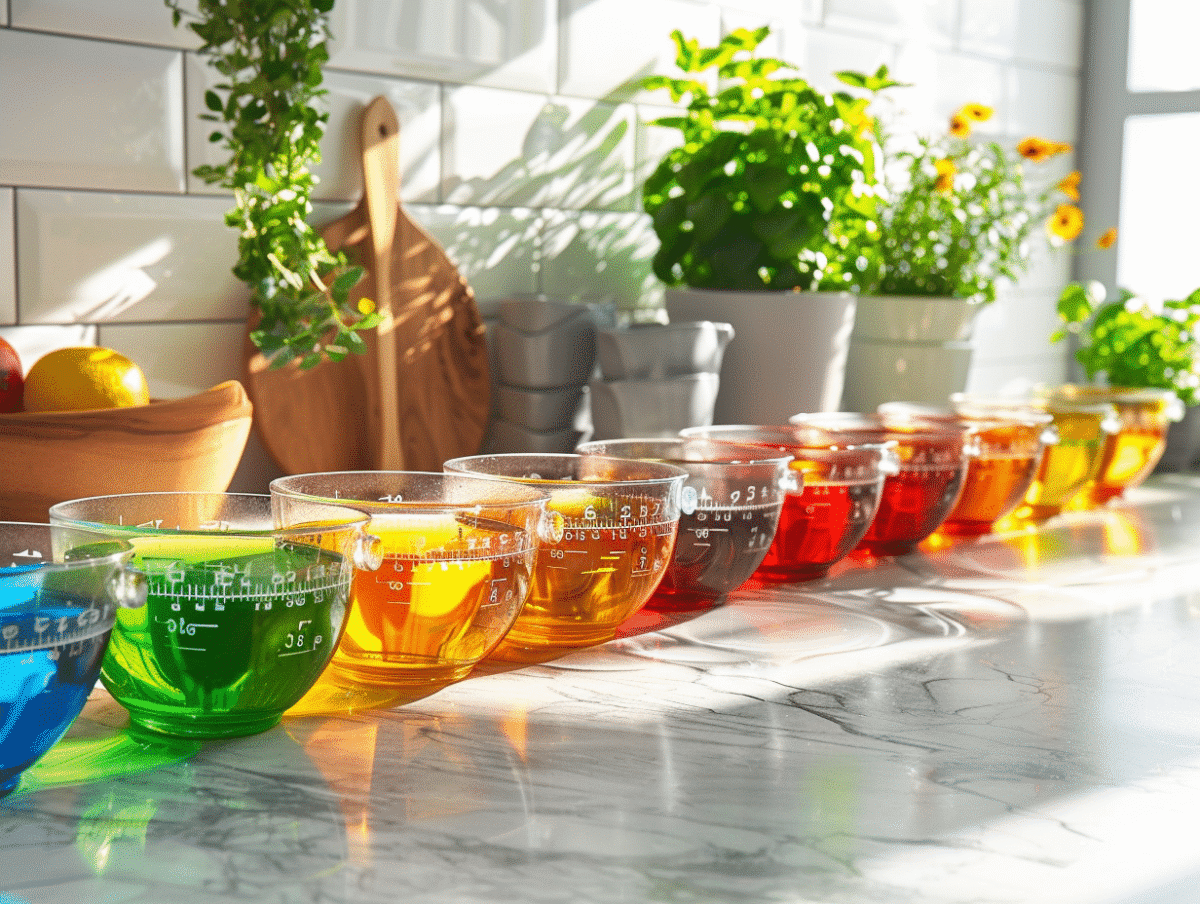
In cooking, the precision of liquid measurements is fundamental to the success of recipes. Whether it’s crafting a creamy soup, a perfectly balanced sauce, or a delicate pastry, the accuracy of volumes is essential. Liquids, such as water, milk, oils, or essences, require special attention because a small mistake can alter the harmony of flavors or the texture of the dish. Using precise measuring instruments, such as graduated measuring cups or measuring spoons, becomes an indispensable gesture for any cook concerned with presenting successful dishes every time.
Mastering Liquid Measurements in Cooking: Essential Basics
In the world of cooking, accuracy is a virtue. Measurement units in cooking are the guarantees of flavor harmony and ideal consistency. Approaching the preparation of liquid ingredients without a thorough understanding of these units is like navigating without a compass in the ocean of recipes. In professional catering, where repeatability and consistent quality of dishes are required, this rigor is not only valued but necessary.
Take measuring tools: they are the silent partners of any culinary success. Measuring cups and kitchen scales are just examples among others. With a measuring cup, a cook can easily convert volumes into universal units – one cup equals 240 ml, a standard in most recipes. Tablespoons, on the other hand, offer a finer measurement, at 15 ml.
Converting measurements can sometimes seem like a challenge, especially when switching from one system to another. ’40cl to grams’, this expression illustrates the need to understand the equivalences between volume and weight, which is fundamental for ingredients like syrups, oils, or creams, whose density varies. A precise kitchen scale, capable of measuring liquids in grams, then becomes an invaluable tool.
Precision is key, and it is acquired through practice and knowledge of the equivalences between different measurement units. Conversion charts can be valuable allies in this quest for precision, allowing cooks to easily transition from centiliters to milliliters, from cups to tablespoons. In this field, precision is not an end in itself but the means to achieve culinary perfection, dish after dish.
Tips and Methods for Accurate Measurements and Successful Recipes
To adjust measurements accurately, knowledge of equivalences is paramount. A cup of liquid weighs 240 ml, while a cup of dry material, like flour, represents 120 g. The conversion of measurements between ounces, pounds, and kilograms also requires careful attention – one ounce equals 28 g, one pound equals 454 g, and one kilogram equals 1000 g. These figures, although simple in appearance, form the foundation of the conversion process that governs recipe preparation.
Conversion charts, visual tools of great utility, allow for easy navigation between volumes and weights. A glass of liquid corresponds to centiliters, while its equivalent in grams will vary according to the density of the measured substance. Using these charts, combined with precise measuring tools such as kitchen scales, optimizes the accuracy of proportions and ensures the success of each recipe.
However, let us not overlook the contribution of experience and intuition in cooking. These qualities, while not quantifiable, complement the use of conversion charts and precise measurements. They allow the cook to adjust recipes based on variations in ingredients or cooking conditions. The rigor of measurements must be accompanied by flexibility and adaptability, assets that only experience can truly refine.