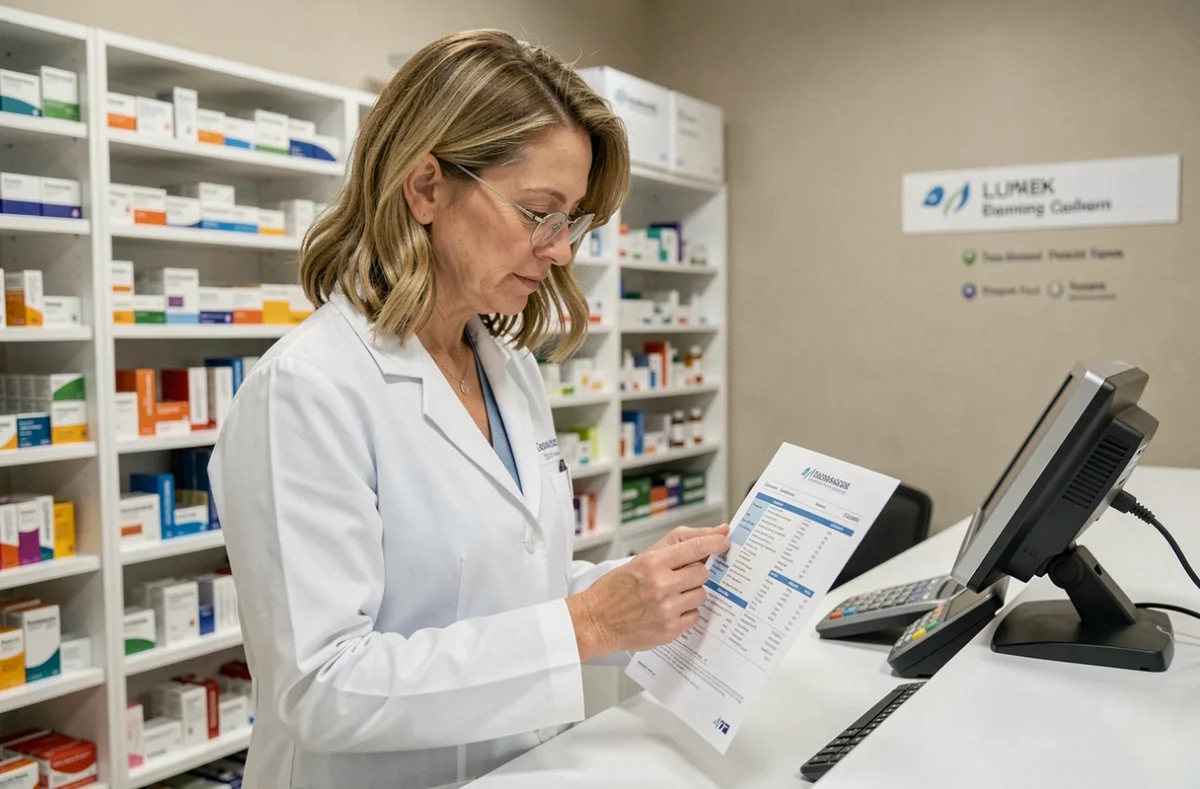
For the past few months, community pharmacies have been doing more than dispensing medication over the counter. Vaccination, shortage detection, digital patient monitoring: the healthcare and pharmaceutical sectors are going through a period in which responsibilities are multiplying faster than legislation can keep up. Understanding these changes means anticipating what the pharmacy of the future will look like.
Medicine shortages in France: pharmacies as early-warning systems
Have you ever noticed that a common medication was unavailable from your pharmacist for several weeks? Once an occasional occurrence, shortages have become a persistent problem in France. The response now taking shape is not coming from a major industrial plan, but from the front line.
An experiment announced in France will test a practical system: weekly transmission to the ANSM of stock, dispensing and ordering data from the management software used by around 200 pharmacies. The idea is simple. Instead of waiting for a hospital to report a shortage, the pharmacy would become an early-warning system for supply pressures.
Meanwhile, Pharmactuelle’s news coverage regularly tracks these regulatory developments, which are reshaping the day-to-day work of healthcare professionals. This kind of monitoring helps make sense of changes before they take effect.
Legislation is also moving forward, albeit cautiously. A bill currently under review by the National Assembly would allow greater flexibility around medicines’ safety stocks, under ANSM supervision. Nothing has been definitively adopted yet, but the direction is clear: give health authorities a more detailed, faster picture of what is in short supply and where.

Critical Medicines Act: what the European legislation means for the pharmaceutical sector
Medicine shortages are not a problem unique to France. Across the European Union, a provisional agreement on the Critical Medicines Act introduces a shift in approach to public procurement by hospitals.
Until now, price has been the main factor in selecting medicine suppliers. The new legislation would incorporate resilience requirements into tenders for medicines deemed critical. For certain products considered vulnerable, preference could be given to production within the EU.
In practice, this means a European pharmaceutical company able to guarantee continuity of supply could be selected over a cheaper competitor that is more exposed to logistical disruptions. This is not protectionism in the traditional sense. It is a trade-off between unit cost and collective health security.
For community pharmacies, the impact will be indirect but real. If hospitals secure their supplies of critical medicines more effectively, the knock-on effects for pharmacies (patients redirected elsewhere, prescriptions left unfilled) should decrease.
Vaccination in pharmacies: beyond the injection
Pharmacy-based vaccination has been available for several years. What is changing is the scope of the pharmacist’s role in the vaccination process.
A pilot program in Auvergne-Rhône-Alpes tested a three-step protocol:
- A review of the patient’s vaccination status, carried out at the pharmacy using their health record or pharmaceutical file
- A personalized consultation to identify any missed booster shots and answer the patient’s questions
- The pharmacist prescribing and administering the vaccine, without the patient first having to see a doctor
This model goes beyond administering an injection. The pharmacist becomes a prescriber within a defined framework, changing how responsibilities are shared among healthcare professionals. For patients in areas where access to a general practitioner is difficult, this development meets a real need.

Health data and digital technology: trends reshaping pharmaceutical development
The word “data” comes up in every discussion about the future of the pharmaceutical sector. But what exactly does it mean?
Two uses stand out. The first relates to research and the development of new medicines. Analyzing large clinical databases makes it possible to identify therapeutic targets more quickly. Some pharmaceutical companies are already using artificial intelligence models to shorten the molecular screening phase—the stage when thousands of compounds are tested to find those worth taking into clinical trials.
The second use concerns patient monitoring after a product reaches the market. Companies are developing platforms that aggregate data from connected medical devices (pacemakers, insulin pumps) to alert doctors when something is wrong. Monitoring becomes continuous rather than limited to appointments.
Both trends raise the same question: who can access the data, and under what conditions? The European Medicines Agency is working on guidelines to govern the use of real-world data in regulatory decisions. The subject is technical, but it will determine how quickly innovations reach patients.
Supplying mature medicines: a fragile funding model
Innovative medicines attract media attention. Mature medicines (generics and older molecules that are still prescribed) get less coverage, but their availability depends on a precarious economic balance.
The evidence is clear: supply security is funded by the most vulnerable links in the chain. Manufacturers of active pharmaceutical ingredients, often based outside Europe, operate on very slim margins. When a site closes or cuts production, alternatives are scarce.
The European and French measures mentioned above are aimed precisely at this segment. But several years can pass between a bill being adopted and a production line actually being relocated. Current trends in the pharmaceutical market show that the problem has been recognized. The question is whether the funding will follow.
France’s healthcare and pharmaceutical sectors are going through a period of shifting responsibilities, changing tools and rewritten rules. Community pharmacies are taking on more responsibilities, Europe is trying to secure its supplies, and digital technology is accelerating research. Each development may seem modest on its own. Taken together, they point to a change in the way the sector operates—one that affects professionals and patients alike.